

Tallinn today presents a fascinating duality. Its UNESCO-listed medieval Old Town, with its spires and cobblestone streets, draws millions of visitors each year, offering a picture-postcard view of Hanseatic Europe. Yet, a mere few kilometres away lies a different world: the vast, prefabricated housing estates of Mustamäe, the abandoned concrete ruins of a coastal air-defense base, and the imposing, brutalist structure of the Linnahall. These are the remnants of a half-century of Soviet occupation, a period that has become an increasingly popular and compelling focus for modern tourism. The popularity of “Soviet-era tours” in Tallinn stems from a complex interplay of historical curiosity, a desire for authentic experience, and the city’s unique ability to curate and present its contested past, offering visitors a tangible, and often chilling, glimpse into life behind the Iron Curtain.
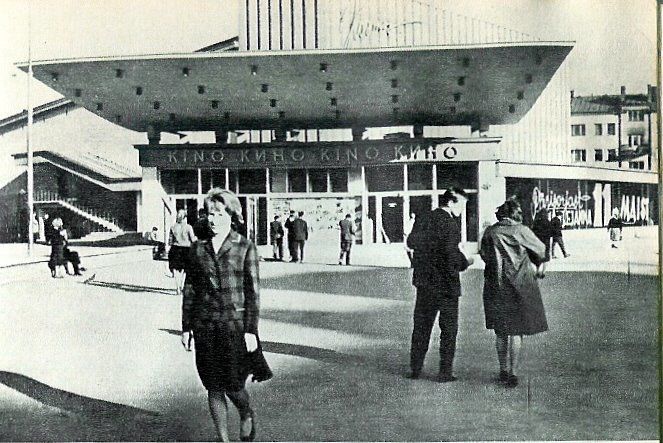
A Contradiction in Soviet Tourism
The story of Soviet Tallinn begins with an irony: for much of the Soviet period, the city was a showcase destination for foreign tourists, particularly from neighbouring Finland. This was not an act of openness but a calculated move by the Soviet authorities to earn valuable foreign currency and project an image of a modern, progressive society. The reopening of the regular ferry connection between Tallinn and Helsinki in 1965 was a turning point. Before this, travel was arduous, often requiring a circuitous six-day journey through Leningrad. The new route transformed Tallinn into a primary gateway for Western visitors, a rare point of contact in a closed-off empire.
The numbers speak volumes. In 1965, just under 9,000 Finns visited Tallinn. By 1975, that figure had soared to over 61,700. The Estonian SSR, with its geographic and linguistic proximity to Finland, became the most popular Soviet republic for Finnish tourists, ranking third in the entire USSR for foreign visitors, behind only Moscow and Leningrad. For the Soviet planners, this was a success, generating significant hard currency—nearly a million rubles by 1967. For the Finnish visitors, many were “common tourists” or even “vodka tourists,” seeking cheap alcohol and a taste of the exotic in Tallinn’s bars and restaurants.

This early tourism, however, was tightly controlled. Western visitors were largely confined to Tallinn and a few other select cities like Tartu and Pärnu. Even then, movement was restricted. Tartu could only be visited for a single day, with tourists forced to return to Tallinn to sleep, due in part to the presence of a Soviet airbase nearby. The Soviet tourist marketing of the era was a strategic tool, a form of architectural and ideological propaganda. As one scholar notes, even in film, the most rigidly controlled art form, the representation of Tallinn’s medieval Old Town was a key arena for negotiation between conflicting ideologies and national identities. The state presented a sanitized, romanticized version of the city, but for many Estonians, this “medieval trend” was also a subtle form of resistance, a way to reclaim their national heritage. This tightly managed “tourist gaze” of the Soviet era created the very conditions for today’s tourism, as modern visitors seek to uncover the reality behind the official narrative.
Book a guided tour in Tallinn today
The Tangible Ruins of a Regime
Today’s Soviet-era tours are, in a sense, a quest for that hidden reality. They are a journey to the physical remnants of a system that was once both invisible and all-powerful. Unlike the preserved medieval centre, these sites are often decaying, reclaimed by nature, or repurposed, offering a stark and authentic counterpoint to the city’s pristine image.
One of the most popular tour destinations is the abandoned Soviet air-defense base on the Viimsi peninsula. This area was once a restricted border zone, off-limits to ordinary citizens due to its proximity to the sea. Now, tourists can walk through the forest to find concrete blast walls, overgrown storage areas, and other structures, all that remains of a once-secret military installation. This site offers a powerful, visceral experience; it is a place where the military paranoia of the Cold War is made concrete, literally hidden in plain sight.

Equally compelling are the monuments of Soviet power, particularly the collection of socialist realist sculptures at the Maarjamäe Palace courtyard. This open-air exhibition is unique in Estonia, housing saved monuments to figures like Lenin and Stalin, which were removed from public squares after independence. It is a “graveyard of monuments,” a curated space that allows visitors to witness the physical fall of an ideology and the complex process of de-communization. This is contrasted by the huge Communist Victims Memorial on Maarjamäe, which serves as a powerful counter-memory, commemorating those who suffered under the occupation.
These tours also delve into the grand, failed ambitions of the Soviet state. The Linnahall, or Tallinn City Hall, is a colossal, brutalist concrete structure built for the 1980 Moscow Olympics, which saw Tallinn host the sailing regatta. Now abandoned and crumbling, its vast, empty spaces and sea-view steps are an architectural monument to a bygone era. It stands as a testament to the Olympic spirit as a propaganda tool, a project that briefly put Tallinn on the world stage but ultimately failed to deliver the lasting prosperity it promised. The Pirita Olympic Yachting Centre, another legacy of the games, is also a common stop on these tours, visited with a much more critical eye than in 1980.
The Everyday Life of a “Normal” Occupation
Beyond the military installations and grand monuments, the true draw of Soviet Tallinn tours is the exploration of everyday life under a totalitarian regime. This is where the history becomes personal, focusing on the struggles, surveillance, and quiet acts of defiance that characterized the Estonian experience.
Walking tours frequently begin at the former KGB Headquarters, a building that still exudes a sense of dread. The infamous Viru Hotel is another highlight. This Soviet-era hotel, a symbol of modern luxury for its time, had a secret: the upper floors were used by the KGB to spy on foreign guests, and it is said that the rooms were riddled with listening devices. The story of the Viru Hotel encapsulates the ever-present, paranoid surveillance that was a hallmark of the Soviet system. The line between the public, welcoming face of the state and its secret, repressive underbelly is made starkly visible.
These tours also explore the vast, new residential districts built during the Soviet era. The Lasnamäe district is a prime example, an expanse of identical, grey-panel apartment blocks that housed the thousands of new workers who flocked to the city during its industrial expansion. While often dismissed as ugly and monotonous, sites like Mustamäe are now being re-evaluated by architects and historians. Built 60 years ago as a “satellite town,” it was designed according to the “15-minute city” concept, with schools, shops and other amenities within easy reach. It also features unique public art, like the “Girl with a Dove” wall panels, and experimental architectural designs that challenge the stereotype of Soviet uniformity. The tours offer a nuanced perspective, showing that these neighbourhoods were not just concrete jungles but homes where real lives were lived, and where even in the oppressive system, a distinct Estonian cultural life thrived, with artists and writers like Mati Unt making their home there.

Why We Visit: The Allure of the Recent Past
The popularity of Soviet-era tourism in Tallinn can be attributed to several converging factors. For one, it satisfies a deep fascination with the Cold War and the “forbidden” world that was once behind the Iron Curtain. The aesthetic of decaying concrete and forgotten military secrets holds a powerful allure, often framed in terms of “dark tourism,” a journey to sites associated with suffering, oppression, and death.
However, the appeal goes beyond simple morbid curiosity. It is about authenticity. After decades of curated official narratives, modern tourists are drawn to the unvarnished reality of the past. The Soviet-era sites of Tallinn are not polished museum pieces; they are real, tangible places that tell a story of resistance and survival. The Song Festival Grounds, for example, is a site of immense national pride, where the “Singing Revolution” of the late 1980s saw hundreds of thousands of Estonians gather to protest peacefully for independence. The Soviet-era tours connect the dots between the oppression of the past and the triumphant rebirth of the Estonian state, offering a deeply moving narrative of national resilience.
Ultimately, the success of these tours is a testament to how Tallinn has come to terms with its history. The city does not erase its Soviet past but has instead integrated it as a critical part of its modern identity. By presenting this complex legacy—from the KGB headquarters to the Olympic ruins—Tallinn offers an education in the 20th century’s defining ideological struggle. The visitor leaves not just with a sense of the past’s darkness but with a profound appreciation for the Estonian people’s courage and a deeper understanding of the city’s present, which emerges from the shadows of its Soviet era, forever shaped by it but no longer defined by it.
This response is AI-generated and for reference purposes only.
Book a Soviet history tour in Tallinn with GetLocals.

Bryn Jacobs Chief Editor
Hello dear Travelers! I am Bryn Jacobs and I am your travel advisor. Having a vast experience in traveling throughout Eastern Europe and having researched this part of the world myself. I write articles on the site about travel experiences in Eastern Europe with statistics and interesting facts.