

At first glance, the skyline of Chișinău, the capital of Moldova, might seem jarringly incongruous. Nestled among the leafy boulevards and the elegant, if weathered, 19th-century architecture of a city that once prided itself on its green spaces, rise monumental structures of stark, unadorned concrete. These are the remnants of the Soviet era, buildings that many once saw as symbols of a totalitarian regime but which are now being rediscovered for their stark, monumental beauty. Today, Soviet brutalism in Chișinău is not just an architectural footnote; it is a burgeoning tourist attraction, with visitors from around the world embarking on guided tours to explore these “concrete colossi.” The fascination is driven by a complex blend of aesthetic appreciation, historical curiosity, and the allure of a tangible, crumbling past that stands in sharp contrast to the city’s ongoing search for a new identity.
The Architecture of a Soviet Republic
To understand the allure of Chișinău’s brutalist architecture, one must first understand its context. Moldavia, as it was known during the Soviet era, was a small but strategically important republic on the empire’s southwestern fringe. After World War II, the Soviet Union embarked on a massive reconstruction and modernization effort. Architecture became a key tool for projecting power, ideological might, and a vision of a futuristic, utopian society. While the initial post-war period favored the grandiose Stalinist Empire style, the 1960s brought a shift towards a more functionalist and austere aesthetic that would become known as Soviet modernism or brutalism.
Brutalism, derived from the French term béton brut (raw concrete), was a global architectural movement, but in the Soviet context, it took on a unique character. It was characterized by its heavy, monolithic forms, the honest expression of its concrete and steel materials, and a general absence of ornamentation. In Chișinău, this style was implemented on a grand scale, transforming the city into a living museum of Soviet urban planning ideals. Architects, working under state commissions, designed imposing public buildings that would dominate the urban landscape and communicate the power of the state.
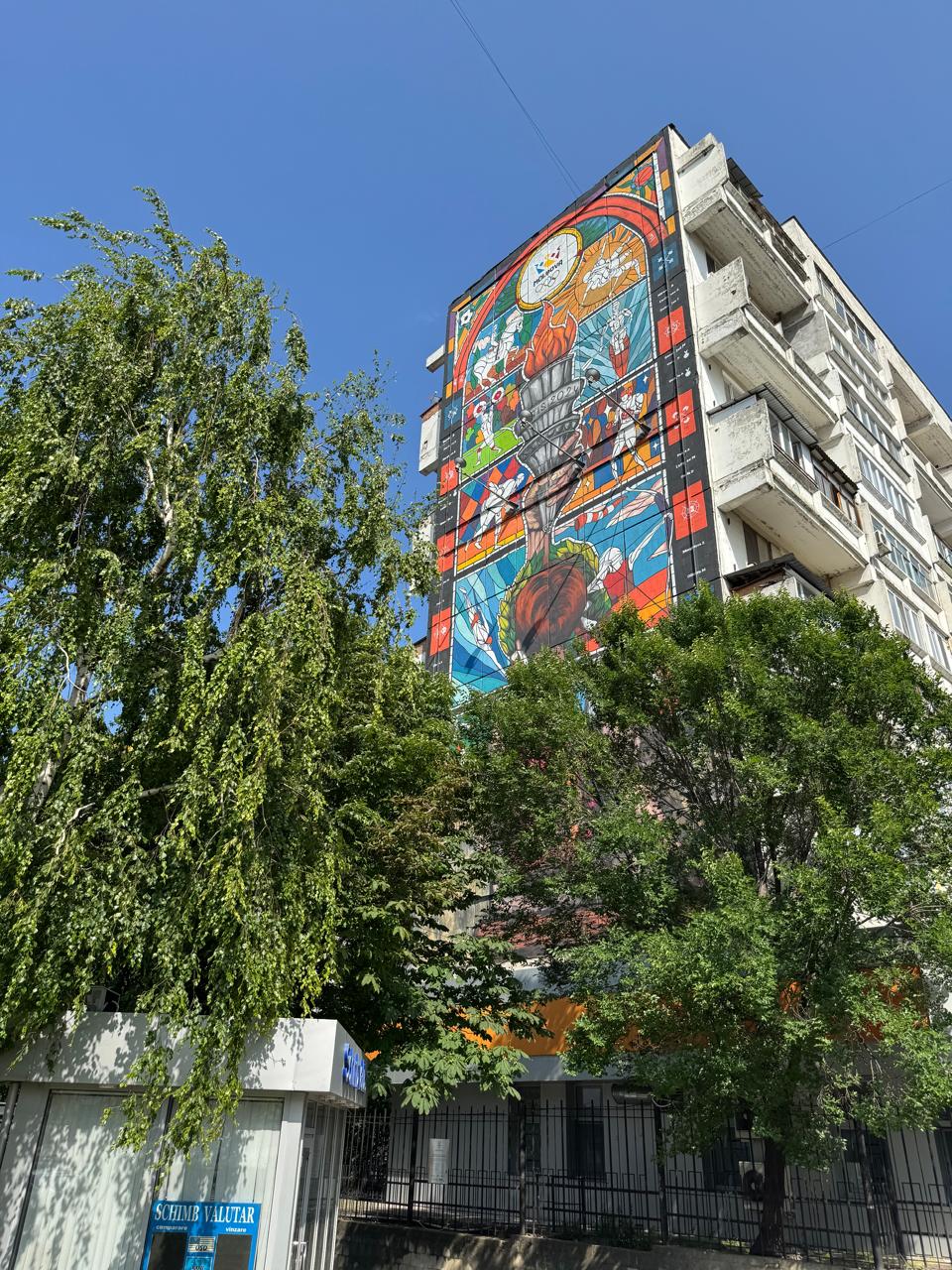
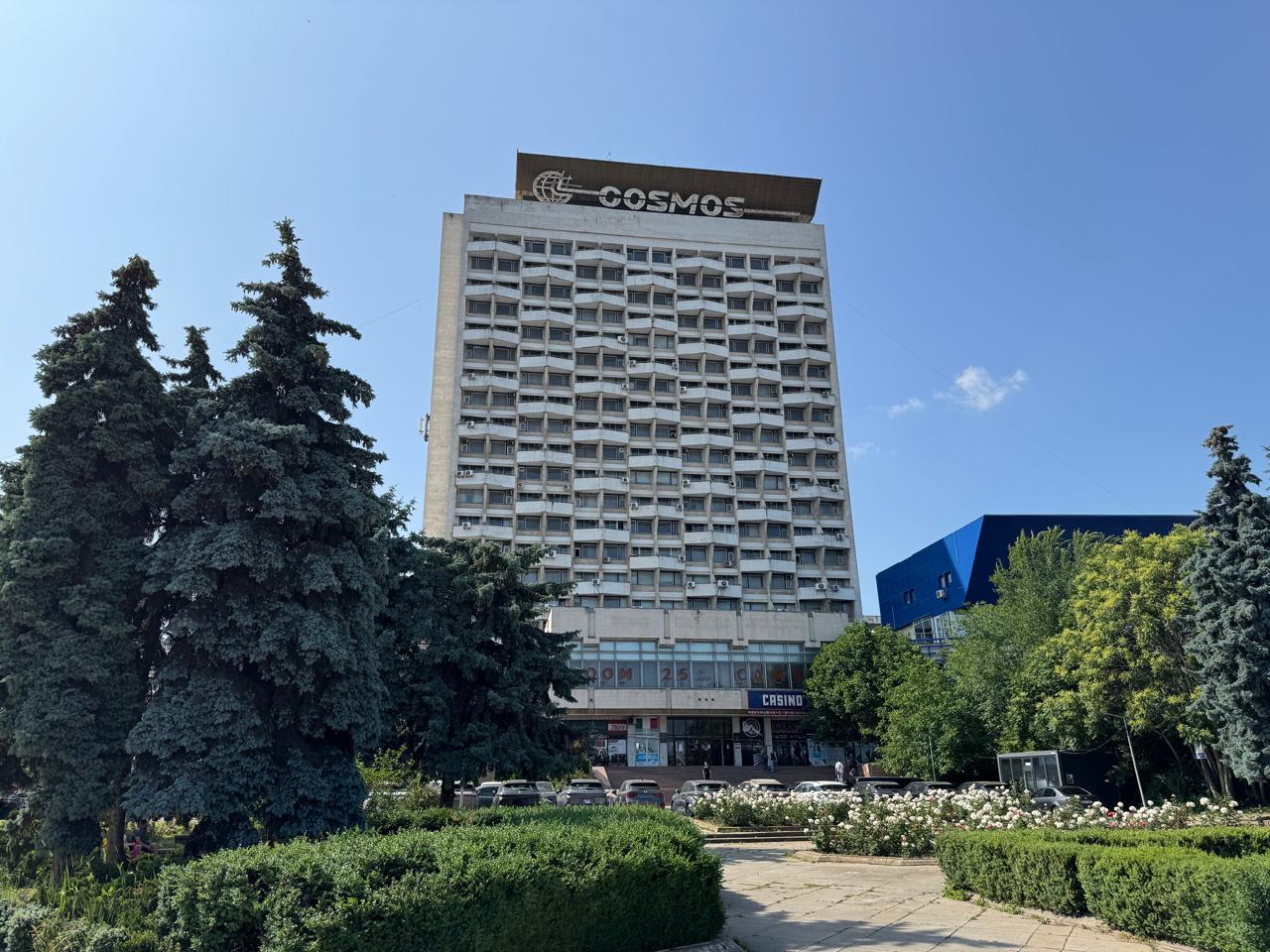
Several iconic structures serve as the prime examples of this era. The Hotel Cosmos is one of the most emblematic. Its construction began in 1974 and was completed in 1983, a nine-year project that resulted in a formidable 24-story tower dominating the area near the main railway station. Designed by architects Boris Bankin and Irina Kolbaeva, the hotel was a symbol of Soviet hospitality and efficiency, featuring 380 rooms and a capacity for over 700 guests. It was a strategic location, built to accommodate the influx of tourists and officials from across the USSR, often operating at near-full capacity. Today, it stands as a silent, largely non-functional monolith, a testament to a bygone era of Soviet tourism.
Another significant landmark is the Chișinău State Circus, built in 1981 by architects Ala Kirichenko and Simion Shoyhet. This structure is a prime example of socialist modernism, an architectural style closely related to brutalism that often incorporated more expressive forms and decorative elements. The circus was a state-of-the-art venue for its time, with a capacity of 1,900 seats and a ring over 40 feet across, drawing performers from as far as China, Finland, and Germany. Its unique, expressive volume and the sculptural quality of its facade make it a favorite for architecture enthusiasts. Its recent inclusion in the Register of State-protected monuments of the Republic of Moldova highlights a growing recognition of its artistic and historical value.
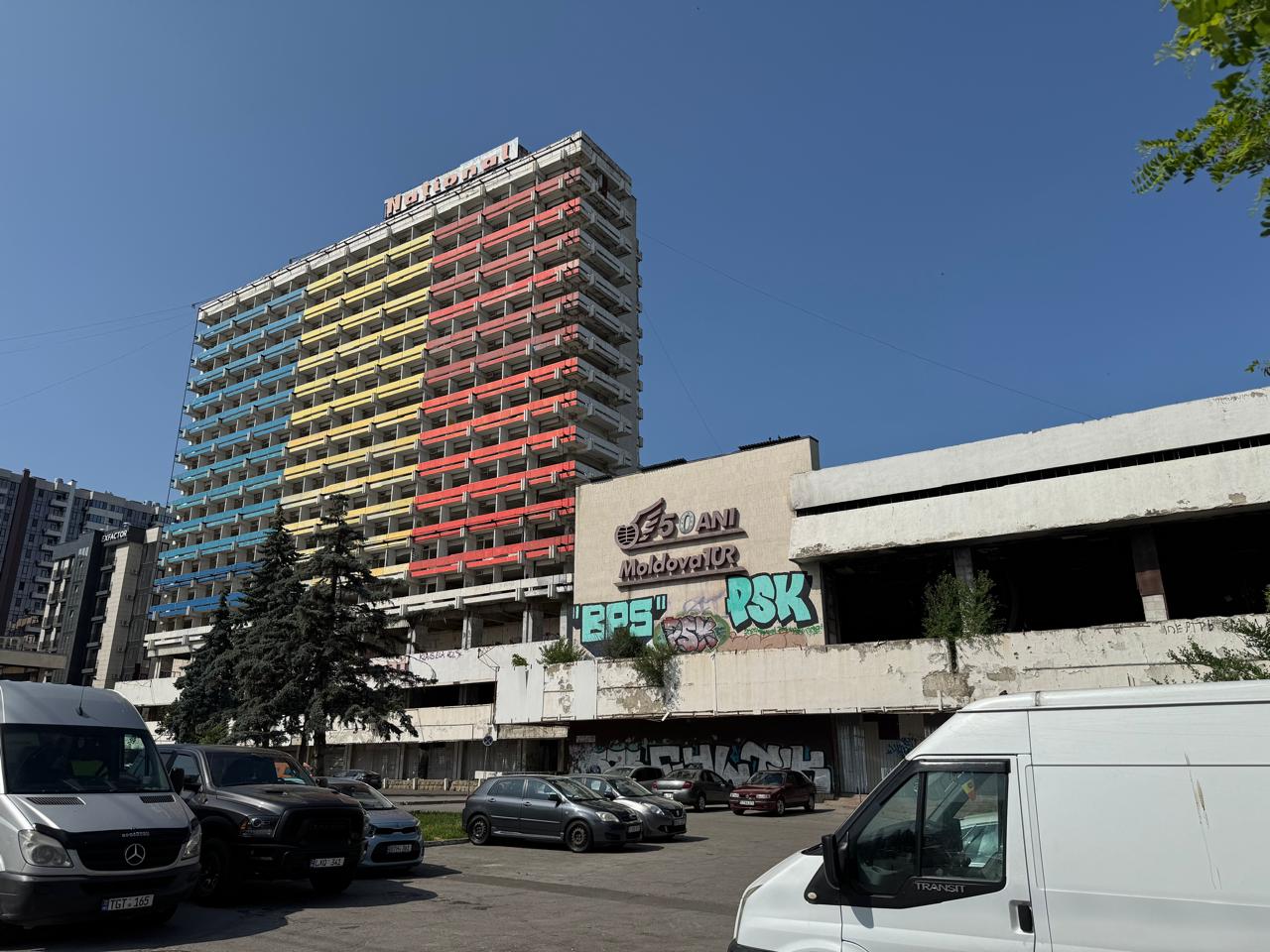
Perhaps the most intriguing residential structure is the “Romanița” residential block, a cylindrical high-rise that looks more like a flying saucer perched on a stem than a typical Soviet apartment building. Designed by Oleg Vronsky in 1980, the building was initially planned as a health center but was repurposed into a “small-family hostel” (a type of housing for newlyweds). Its rounded form was inspired by Marina City in Chicago, a fascinating example of how Soviet architects looked to international modernist trends even as they served a state that officially eschewed “Western” ideals. The building’s quirky features, like misnumbered elevator buttons, only add to its mystique and appeal. These structures, along with the abandoned Hotel Național, are the primary landmarks that draw tourists interested in the tangible legacy of the USSR.
The Allure: Why We Are Drawn to Brutalism
The growing interest in Chișinău’s brutalist architecture can be broken down into several distinct motivations, each appealing to a different type of tourist, but all converging on the city’s unique landscape.
Aesthetic Appreciation and Architectural Education
For many, the fascination is purely aesthetic. Brutalism, long dismissed as ugly and dehumanizing, has undergone a significant critical reappraisal in recent years. Architectural enthusiasts, students, and professionals are drawn to the style’s raw power, its geometric purity, and its honest use of materials. They see in these buildings a powerful artistic vision, a “monumental” quality that commands attention. As one review of the State Circus notes, it is “a brilliant example of socialist modernist architecture”. Similarly, the “Romanița” block is described as a “marvelous design feat in all of its charm and era”.
These visitors are not just passive sightseers; they are students of history. They travel to Chișinău to see firsthand how a global architectural movement was adapted, interpreted, and deployed by the Soviet state to create a new urban reality. They are interested in the technical challenges of building such structures, the spatial dynamics of the massive public squares, and the way architecture was used to shape social behavior. Guided tours often cater to this demographic by offering detailed historical context and exploring “off the beaten track” locations.
The “Post-Apocalyptic” Aesthetic and Urban Exploration
A second and increasingly popular draw is the allure of decay. Many of Chișinău’s most famous brutalist buildings are in various states of abandonment or disrepair. The Hotel Cosmos is no longer functioning, and the State Circus, after years of neglect, is only now undergoing renovation. This condition of neglect, of concrete slowly crumbling and being reclaimed by nature, creates a powerful aesthetic that some find irresistible.
This “post-apocalyptic” or “Soviet sci-fi” vibe is a major selling point for tourism operators. They advertise tours that take visitors to “abandoned hotels with a post-apocalyptic aesthetic” and “hidden corners that most tourists will never see”. This is urban exploration of the highest order, where visitors can experience a sense of discovery, of stepping into a space frozen in time. The contrast between the decaying gray concrete and the sudden discovery of, say, tropical palm trees hidden inside a socialist-era building, as described in one tour, adds to the surreal experience. This interest is so pronounced that a project by an ETH Zurich student even proposed an “adaptive revitalization” model for the abandoned cable car complex in “Butoiaș” Park, aiming to transform a “degraded Soviet modernist relic” into a sustainable tourist attraction.
Book a Soviet history tour in Moldova today.
Nostalgia and History
For some visitors, particularly those from former Soviet republics or those with family connections to the USSR, the tours are a form of pilgrimage, driven by a complex sense of nostalgia. They evoke the lived experience of the era, where these grand buildings were not ruins but vibrant centers of daily life. The tours capitalize on this by offering “narrative approaches” that share “stories and context, not just monuments,” and by including stops at Soviet-style “state canteens” where “portions are generous and the prices are affordable!”. The promise of “Soviet and Sauvignon” – history mixed with Moldovan wine – creates a package that is both nostalgic and pleasurable.
For a younger generation of Moldovans, these tours can be a way of reconnecting with and reinterpreting a past they never knew. The architecture serves as a tangible bridge to a history that is often discussed but rarely experienced in its physical form. As one project focused on the Hotel Național highlights, the building’s fate is intertwined with Moldova’s own “search for identity after the independence,” with the project aiming to create a “new collective identity” by reimagining how these spaces are used.
The Rise of the “Brutalism Tour”
The demand for these experiences has led to the creation of a dedicated and specialized tourism industry in Chișinău. These are not your typical city tours that focus solely on cathedrals and historic monuments; they are designed to delve deep into the city’s Soviet soul.
These “brutalism tours” are highly curated experiences. Tour guides often have backgrounds in history, architecture, or urban studies. They are able to provide deep historical and cultural context, pointing out details that the casual observer would miss and explaining the architectural principles behind the grand designs. They also offer a narrative that goes beyond the official state history, sharing “curious, absurd, and often little-known stories about life in the former Soviet bloc”.

The itineraries are carefully crafted to include a mix of iconic and obscure sites. A typical tour might start at the Hotel Cosmos, move on to the abandoned circus, and then explore the residential neighborhoods to see the “Romanița” block. Many also offer a chance to step inside these buildings where possible, either to see the decaying interiors or to experience the strange contrast of a functioning space, like a library or a restaurant, within a brutalist shell.
To further immerse visitors, the tours often combine architecture with cultural experiences. As the popular “Soviet and Sauvignon” tour shows, they pair visits to Soviet monuments with excursions to the world-famous wine cellars of Mileștii Mici or a taste of the city’s vibrant underground culture. This combination of history and hedonism makes the tours appealing to a wide audience. The guides themselves often act as cultural interpreters, helping visitors decode the often puzzling remnants of the Soviet past, providing tips on what to see beyond the tour, and creating what one tour describes as a “personal and informal atmosphere, similar to walking with a friend”.

Conclusion
The phenomenon of Soviet brutalism tourism in Chișinău is more than just a niche interest; it is a powerful lens through which to understand the complex history and uncertain future of the city and Moldova itself. The concrete blocks of the Cosmos Hotel, the soaring auditorium of the State Circus, and the flying saucer of the Romanița block are not just architectural relics. They are artifacts of a grand ideological project that sought to transform a small provincial republic into a model Soviet state.
Today, these buildings are being reevaluated. For some, they are monuments to oppression; for others, they are stunning works of art; and for many, they are simply a powerful and evocative part of their urban landscape. The tourists who flock to see them are seeking authenticity—a glimpse into a world that, for all its flaws, was a tangible reality for millions of people. By exploring these sites, they are engaging in a form of “historical tourism” that confronts not just the aesthetics of brutalism but the human stories of the people who designed, built, and lived within these concrete walls. As the city continues to develop and new glass-and-steel towers rise, these Soviet-era structures serve as an anchor, a stark reminder of the city’s layered and ever-present past, making their preservation not just an architectural necessity, but a crucial part of Chișinău’s evolving identity.
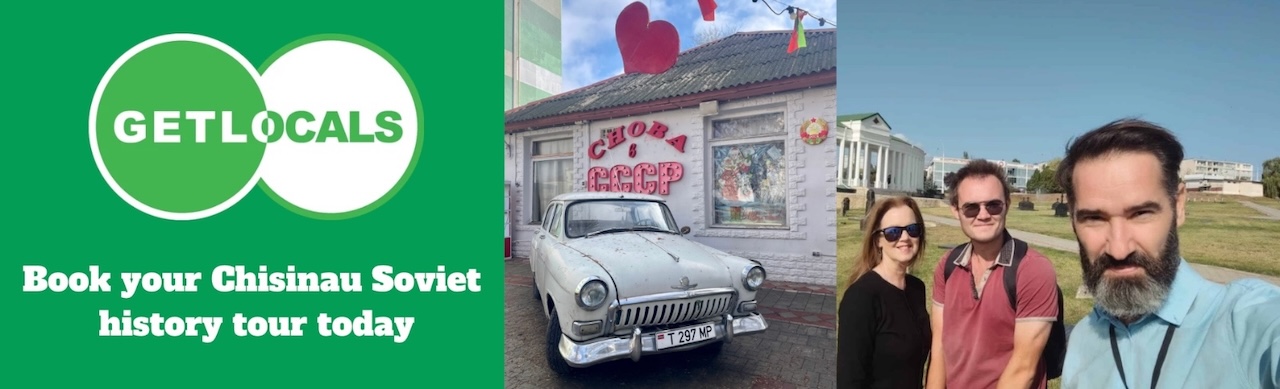
Enjoy a Soviet Brutalism tour in Moldova with GetLocals

Bryn Jacobs Chief Editor
Hello dear Travelers! I am Bryn Jacobs and I am your travel advisor. Having a vast experience in traveling throughout Eastern Europe and having researched this part of the world myself. I write articles on the site about travel experiences in Eastern Europe with statistics and interesting facts.