
Getting to Linnahall from Tallinn: Transport Options and Why a Private Tour Unlocks the Soviet Relic
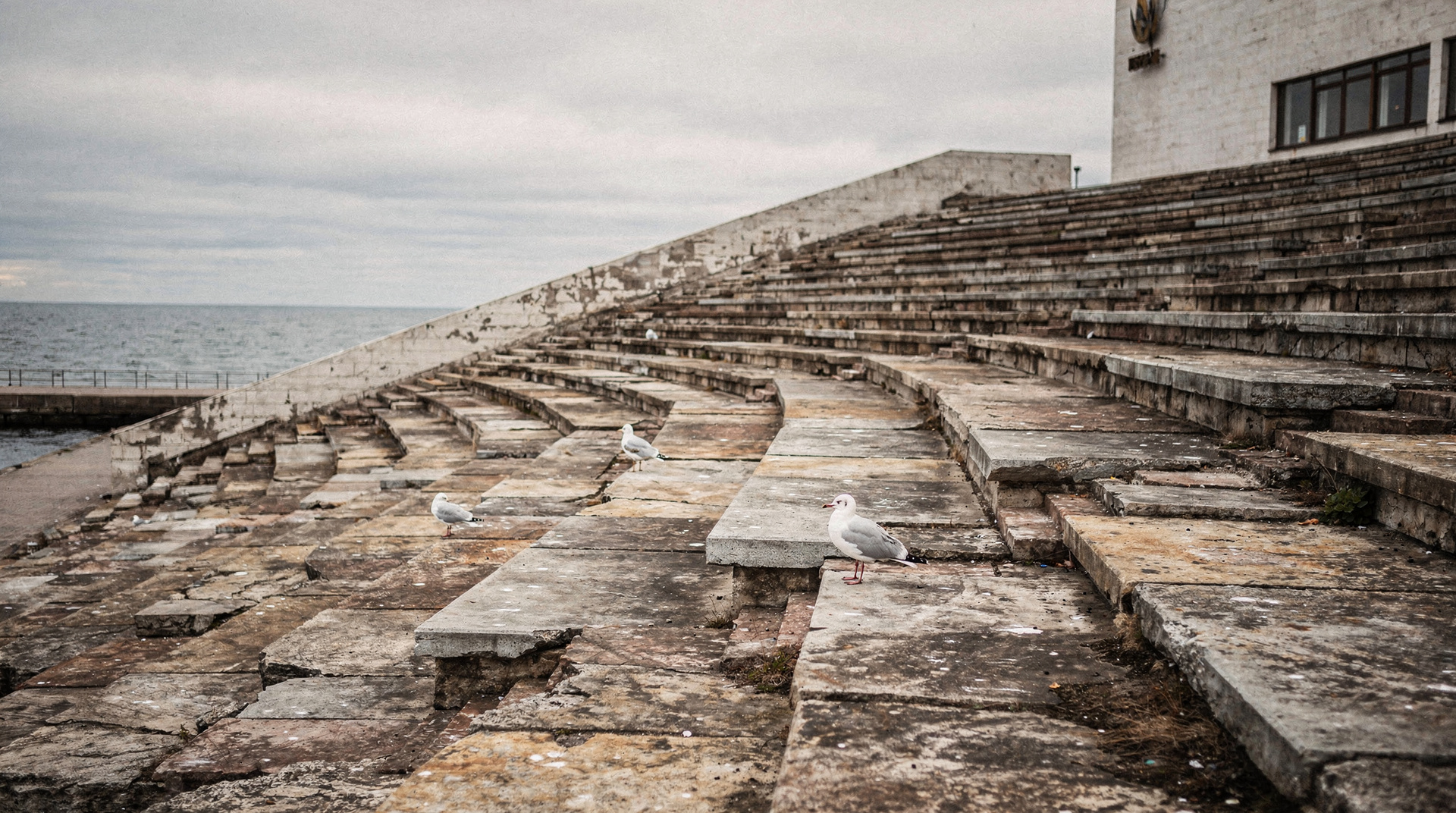
Linnahall is one of Tallinn’s most haunting and misunderstood landmarks: a vast, crumbling Brutalist amphitheatre built for the 1980 Moscow Olympics, now largely abandoned, its concrete steps leading up to a rooftop with one of the best free views in the city. The good news is that getting there is remarkably easy—it sits just north of the Old Town, on the edge of the harbour, within walking distance of the city centre. The harder part is actually understanding what you are looking at, and getting inside its sealed-off interior. This guide covers the practical transport options from central Tallinn, and explains why a private tour is the key to experiencing Linnahall as more than just a scenic ruin.
Understanding Linnahall Before You Go
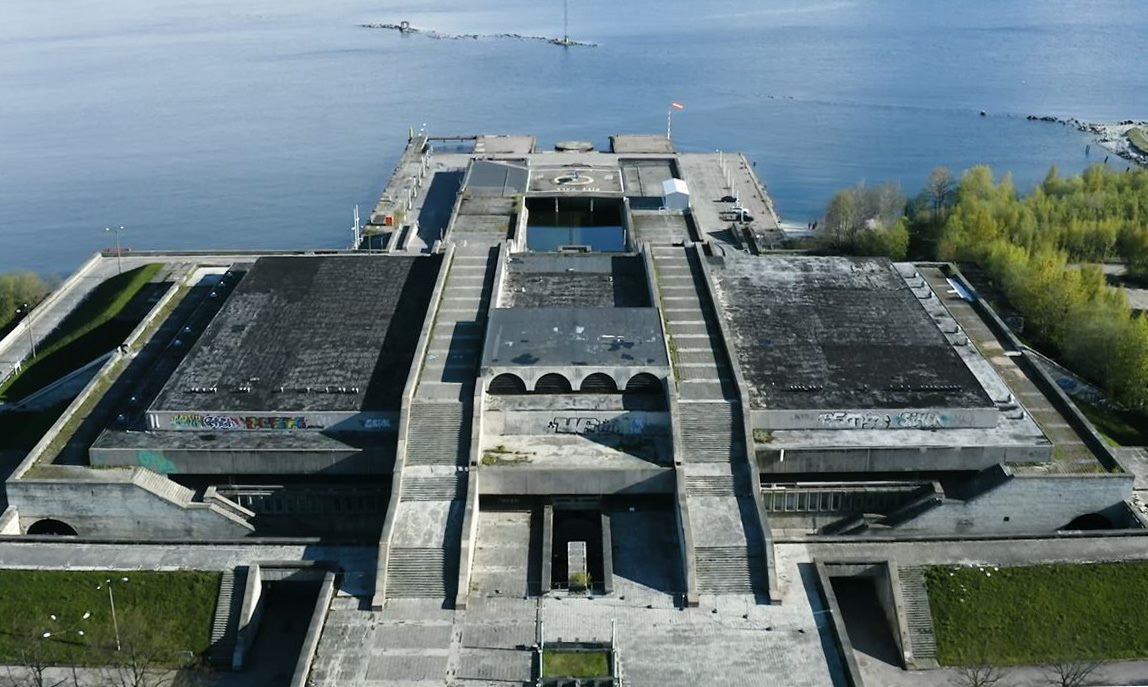
Linnahall was originally named the V. I. Lenin Palace of Culture and Sport, built for the sailing events of the 1980 Moscow Olympics . Designed by Raine Karp and Riina Altmäe, it was a bold statement of Soviet ambition: a massive concrete structure with a 4,200-seat concert hall, an ice rink, and a rooftop designed to serve as an emergency military position overlooking Tallinn Bay . At its peak, it hosted concerts, skating, and late-night entertainment. But the ice hall closed in 2009 and the concert hall in 2010, and since then the building has been largely sealed off, slipping into decay while debates about its future drag on .
Today, the exterior and the rooftop are accessible, and the views from the top are genuinely spectacular—the Old Town spires on one side, the harbour and the Baltic on the other . The interior, however, is closed to casual visitors. It is only opened through organised tours, which is where the distinction between “getting there” and “experiencing it” becomes important.
Option One: Walking from the Old Town
The simplest and most pleasant way to reach Linnahall is on foot. It sits at Sadama tn 1, immediately north of the Old Town and adjacent to the main harbour . From Viru Gate, the walk takes around 10 to 15 minutes . You pass under the coastal highway and the structure appears ahead of you—a long, low concrete mass that looks more like a parking garage from the street than a cultural monument.
From Tallinn’s Baltic Station (Balti jaam), the walk is roughly 1 kilometre and takes about 12 minutes . The route is flat and straightforward, though the final approach involves crossing roads near the harbour. Walking gives you the advantage of approaching Linnahall from the city side, which makes its sheer scale and its awkward relationship with the surrounding urban fabric more apparent. It also allows you to combine the visit with a walk through the Old Town or along the waterfront.
The limitation is obvious: walking gets you to the outside, not the inside. You can climb the exterior steps to the roof, take photographs, and soak in the atmosphere, but the concert hall, the corridors, and the abandoned interiors remain locked behind safety fences .

Book a Soviet history tour in Tallinn
Option Two: Public Transport
Tallinn’s public transport network serves Linnahall well. The tram line 2 stops at Linnahall, which is a 2-minute walk from the site, and at Suur Rannavärav, about 5 minutes away . From Balti jaam, the tram takes about 3 minutes and costs a small fare . Several bus lines also stop at Linnahall, including routes 3, 8, 66, and 73, among others, with the stop itself just 120 metres from the building .
Public transport is cheap, frequent, and reliable. It is the obvious choice for budget-conscious travellers or those staying in accommodation outside the immediate centre. The tram ride from Balti jaam is particularly convenient for anyone arriving by train or staying in the Kalamaja district.
What public transport does not provide, however, is any context. You arrive at a bus or tram stop, walk a couple of minutes, and find yourself at the foot of a crumbling concrete monument with no signage explaining its history or significance. For a building whose meaning is so deeply tied to its past—the Olympics, the Soviet regime, the contested afterlife of a Brutalist icon—this absence of interpretation is a real loss.
Option Three: Taxi or Rideshare
A taxi from the Baltic Station to Linnahall takes about 2 minutes and costs a small fare, making it an option only for those with limited mobility or heavy luggage . From further afield in central Tallinn, the ride is short and inexpensive. Rideshare services operate in Tallinn and can be summoned easily.
The taxi option is fast and door-to-door, but it is essentially a more expensive version of the walk or tram. It solves the transport problem without addressing the experience problem. Unless you have a specific reason to avoid walking or public transport, there is little advantage to taking a taxi to Linnahall.
Option Four: Organised Tours That Include Linnahall
Several walking tours pass by or end at Linnahall, and these offer a way to arrive with context. A free communist history tour that runs from the Tallinn Tourist Information Centre ends at Linnahall after about two hours, covering Soviet landmarks including the former KGB headquarters and the Writers’ House along the way . A private Soviet-era history walking tour also includes Linnahall as a key stop, with a guide who shares personal memories of life under the Soviet system .
These tours are valuable because they place Linnahall within a broader narrative. You learn what the building was for, why it was built the way it was, and how its meaning has shifted since independence. The guide’s personal stories—of shortages, censorship, and everyday life behind the Iron Curtain—add a human dimension that the concrete alone cannot convey.
The limitation of most general walking tours, however, is that they view Linnahall primarily from the outside. They end at or near the building, and the guide explains its history from the steps or the rooftop. The interior remains off-limits.
The Real Key: Tours That Open the Interior
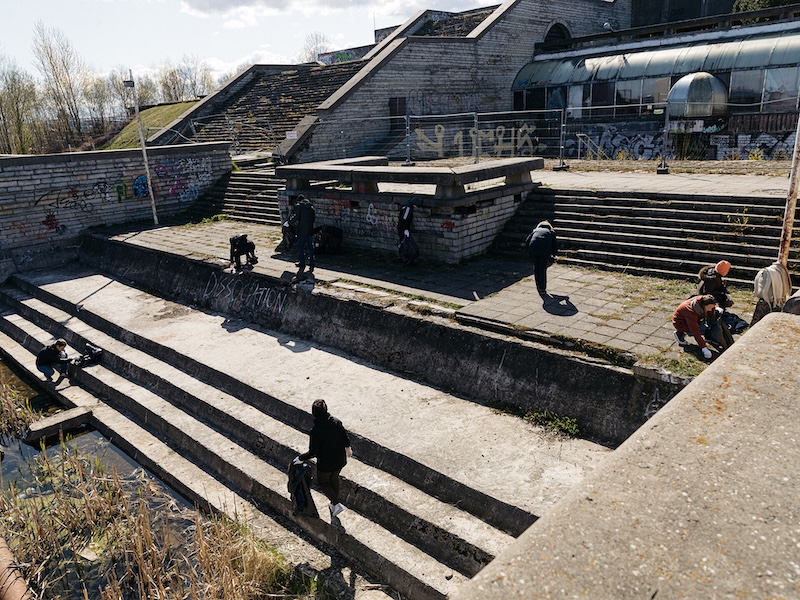
The most significant development for anyone wanting to truly experience Linnahall is the emergence of specialised architecture tours that take visitors inside the sealed-off building. The Estonian Centre for Architecture has run tours with English-language guides that enter the building, exploring the vast, echoing interior, the concert hall, and the stage . One reviewer described the experience as “time travel,” with dust hanging in the air and footsteps ricocheting off bare concrete . Another described a tour that began outside, climbed to the roof, then entered the building through a side entrance, with the concert hall and stage as the highlight .
These tours are not always easy to find. They run on a limited schedule, often a few times per week, and tickets should be booked well in advance—sometimes two weeks ahead . The Estonian Centre for Architecture also offers private tours, including a “Cinematic Landscapes” walk that ends at Linnahall and discusses its use as a filming location for Christopher Nolan’s Tenet .
This is where the case for a private tour becomes compelling. Linnahall is not a museum with regular opening hours and interpretive panels. It is a closed, decaying, and historically contested structure. Access to its interior depends on knowing who runs tours, when they operate, and how to book them. A private guide or a specialised architecture tour handles all of that, and provides the historical and architectural context that transforms a pile of concrete into a legible artefact of the Soviet era.
Why a Private Tour Makes Sense for Linnahall Specifically
Linnahall is a difficult building to appreciate without help. Its Brutalist architecture is austere to the point of hostility; its current state of decay can read as mere neglect rather than layered history; and its Soviet origins are politically and emotionally complicated for Estonia. A guide who understands this complexity can explain why some people want the building demolished and others want it preserved, why it was protected as a heritage site in 1997, and why its future remains unresolved .
A private tour also allows you to tailor the experience to your interests. If you are interested in architecture, the guide can focus on the Brutalist design, the construction techniques, and the building’s relationship to the coastline. If you are interested in Soviet history, the guide can connect Linnahall to the broader story of the occupation and its aftermath. If you are a photographer, the guide can point out the best angles, the light at different times of day, and the rooftop views that make the visit worthwhile even if the interior is closed .
And practically, a private guide solves the access problem. The interior tours are limited and irregular. A private guide who knows the local architecture scene can arrange entry, or at minimum tell you exactly which public tour to book and when. For a building that is otherwise just a scenic ruin, this access is the difference between seeing Linnahall and experiencing it.
Practical Considerations
The rooftop is accessible and free, and it is worth the climb regardless of how you get there. Wear sturdy shoes—the concrete steps are worn and uneven in places. The area around the building can be windy and exposed, so bring a layer even on a mild day. If you are visiting independently, go during daylight hours; the building and its surroundings are not well lit at night, and the atmosphere, while evocative, can feel isolated.
If you want to go inside, check the Estonian Centre for Architecture’s tour schedule well in advance . These tours are popular and sell out. If your dates do not align, a private Soviet history tour that ends at Linnahall is a good alternative, even if it does not enter the building .
The Verdict
Getting to Linnahall is easy: walk from the Old Town, take the tram or bus, or grab a taxi if you must. But arriving is not the same as understanding. Linnahall is a building whose meaning is buried in its history and sealed behind its locked doors. A private tour —whether a specialised architecture tour that opens the interior or a Soviet history walk that provides the context—is the only way to experience it fully. The concrete is impressive on its own, but the stories are what make it unforgettable.

Bryn Jacobs Chief Editor
Hello dear Travelers! I am Bryn Jacobs and I am your travel advisor. Having a vast experience in traveling throughout Eastern Europe and having researched this part of the world myself. I write articles on the site about travel experiences in Eastern Europe with statistics and interesting facts.