
Concrete Ghosts of the Iron Curtain: Soviet Brutalism in Tallinn and Why the World Is Drawn to It
Tallinn is a city of layers. The medieval spires of the Old Town, a UNESCO World Heritage site, draw millions of visitors each year with their fairy-tale cobblestones and merchant houses. But look beyond the postcard-perfect walls, and another Tallinn reveals itself — one of raw concrete, monumental geometry, and the heavy silence of a half-century under Soviet rule. This is the Tallinn of Brutalism, an architectural legacy that was once dismissed as an ugly reminder of occupation but has now become one of the city’s most compelling, if complicated, tourist attractions in Tallinn.
Understanding why tourists are so drawn to these concrete giants requires looking at what they are, where to find them, and the strange alchemy by which buildings once designed to project state power have become objects of fascination, nostalgia, and even affection.
What Is Soviet Brutalism?
The term “Brutalism” comes from the French béton brut, or “raw concrete,” a concept popularized by Le Corbusier and embraced in post-war reconstruction across the globe . In the Soviet context, Brutalism took on a distinctive character. It was architecture as ideology — monumental, uncompromising, and designed to impress upon the individual the overwhelming scale and permanence of the state.
Soviet Brutalism in Estonia arrived in a specific historical context. Estonia was occupied by the Soviet Union from 1940 to 1941, then again from 1944 until independence in 1991. During this half-century, architecture became a tool of Sovietization. Buildings were not merely functional; they were political statements. The grand projects of the late Soviet period — particularly those associated with the 1980 Moscow Olympics — represented the state’s ambition to present a modern, powerful face to the world while simultaneously controlling the narrative of its occupied territories .
In Tallinn, this manifested in several ways: monumental public buildings of raw concrete and local limestone, vast housing districts of prefabricated panel blocks, and structures designed to serve both practical and propagandistic purposes. The architecture was intended to be read as progress, as modernity, as the inevitable shape of the future. Today, it reads very differently — as a palimpsest of difficult history, utopian ambition, and quiet decay.
The Crown Jewel: Linnahall
No discussion of Soviet Brutalism in Tallinn can begin anywhere but Linnahall. Standing on the edge of the Baltic Sea, just a short walk from the Old Town, this vast concrete structure is the city’s most iconic — and most debated — Soviet-era landmark .
Originally called the V.I. Lenin Palace of Culture and Sports, Linnahall was built for the 1980 Moscow Olympics, when Tallinn hosted the sailing events because the Soviet capital lacked access to the sea . Designed by Estonian architects Raine Karp and Riina Altmäe, it was conceived as more than a sports venue: it was a bold architectural gesture, a physical and symbolic bridge between the historic city center and the Baltic shore .
The structure is a masterclass in Soviet monumentalism. Its simple but majestic forms — a stepped, ziggurat-like mass of concrete rising from the waterfront — draw comparisons to Babylonian ziggurats, Swedish fortifications, and Mexican pyramids . It was the only structure in the Soviet period built directly on the sea, giving it a special cultural and spatial prominence . Inside, it housed a 4,200-seat concert hall, an ice rink, and numerous cafés and bars. At its height, it pulsed with life, hosting everything from local legends to international acts like Duran Duran .
The paradox of Linnahall is that even at its peak, it bore the hallmarks of a grand project rushed to meet a deadline. Some sections were solid and striking; others were hastily finished and barely held together. One infamous example: the amphitheater stage, intended as a temporary fixture, remained in use throughout. During one circus rehearsal, a hippopotamus crashed through it .
In 1997, Linnahall was added to Estonia’s list of protected buildings. But heritage status complicated rather than facilitated restoration. Years of neglect led to its closure on 1 January 2010 . Hopes for renovation faltered after a redevelopment company became embroiled in a corruption scandal, and no new investor has stepped in since .
Today, Linnahall is largely sealed off, though a handful of residents still occupy parts of the building — a reflection of Tallinn’s surging housing costs . The recording studio continues to draw artists, and the exterior attracts a steady stream of skaters, sunset-watchers, and urban explorers. In 2020, Christopher Nolan used the site as a stand-in for the Kyiv Opera House in Tenet, briefly reviving the long-abandoned concert hall as a bustling, alive space on screen .
The building has become a subject of heated debate: should it be restored, repurposed, or torn down? The latest proposal envisions transforming the site into a modern event center and re-establishing its link between the city and the sea . One thing is certain: Linnahall will remain intact, at least for now .
Beyond Linnahall: Where to Find Soviet Brutalism in Tallinn
While Linnahall dominates the conversation, it is far from the only example of Soviet Brutalism in Tallinn. Several other sites offer windows into this architectural world, each with its own character and history.
The National Library of Estonia stands on Tõnismägi as another major work by Raine Karp, the architect behind Linnahall . Completed in the early 1990s but designed during the Soviet era, it is one of the most significant examples of Estonian Brutalism. Built from local limestone, its pyramid-like structure and narrow windows give it a defensive, almost medieval quality — a fortress of knowledge .
Hotel Viru offers a different kind of Soviet architectural experience. Built in 1972, it was the first high-rise in Tallinn and the only place in the city where foreign tourists were allowed to stay during the Soviet era . But the hotel had a secret: the 23rd floor, officially “non-existent,” housed a KGB surveillance unit that monitored every conversation in the rooms below . Today, the KGB Museum on that floor preserves this chilling and often absurd history, featuring original equipment and listening devices hidden in plates and light fixtures .
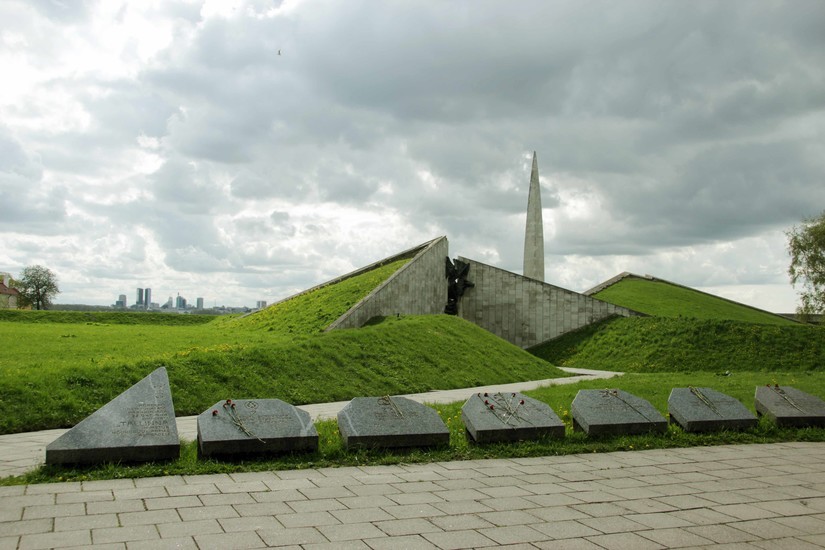
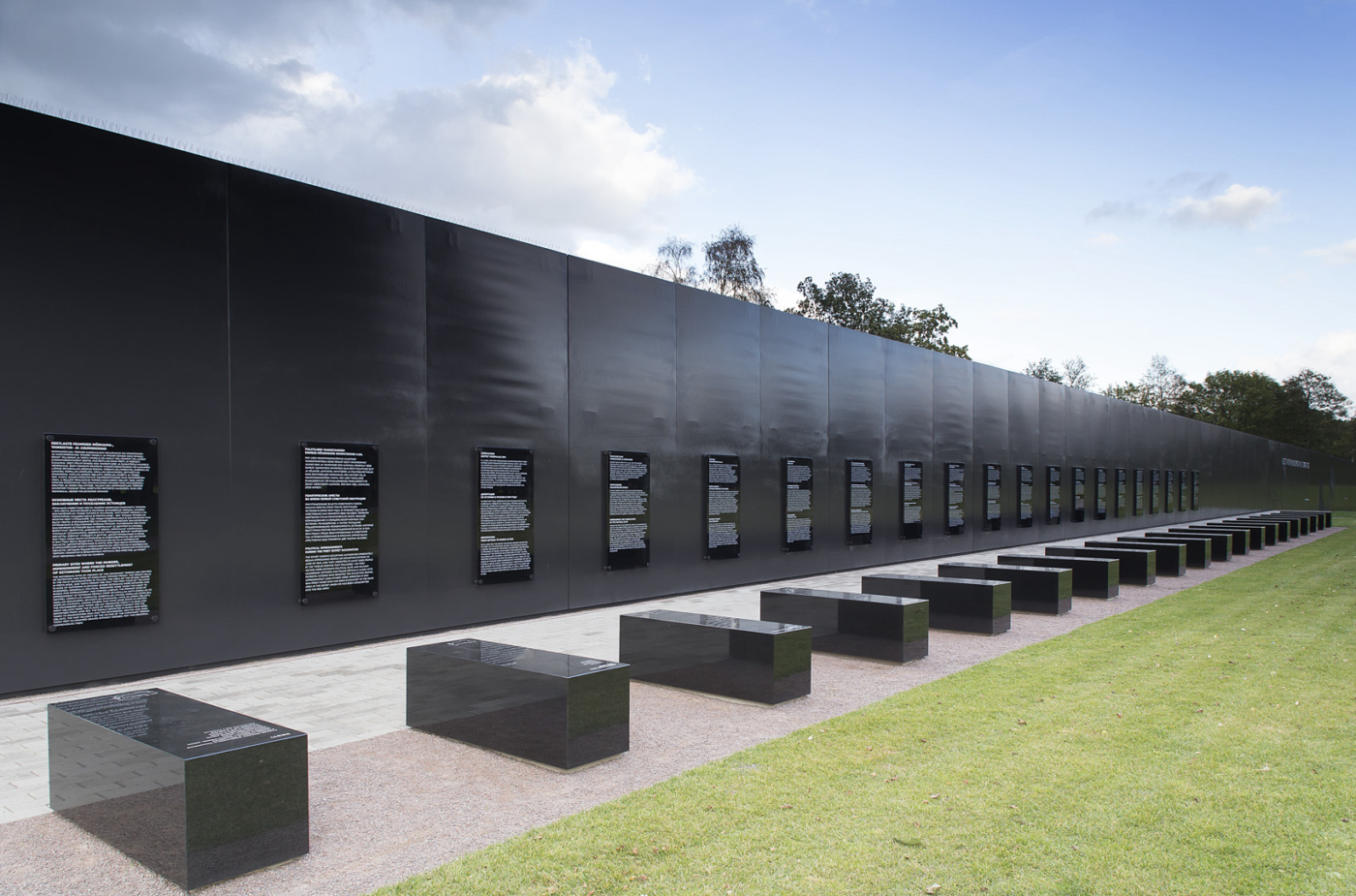
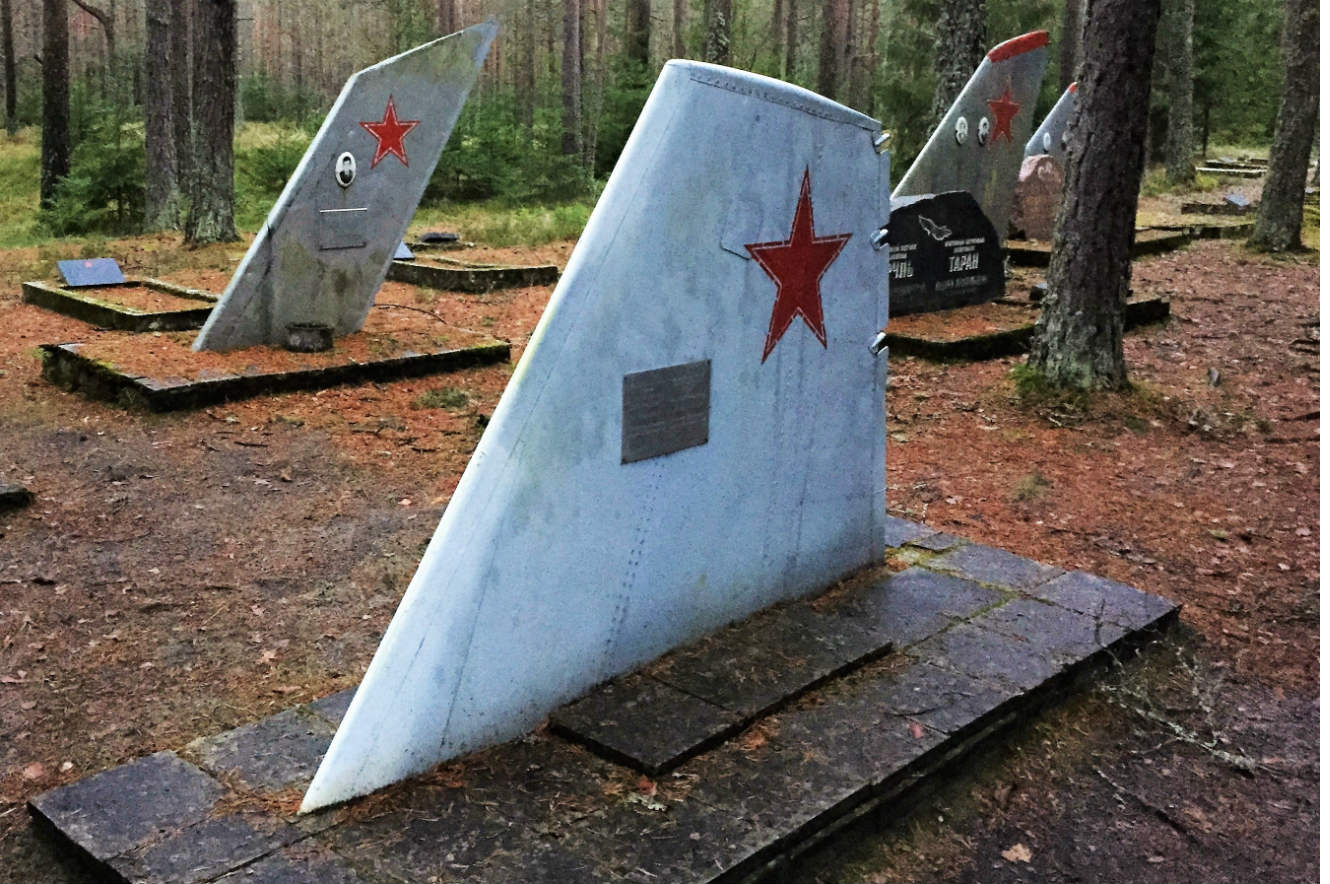
The Maarjamäe Memorial Complex is a particularly striking example of Soviet memorial architecture. Inaugurated in 1975, it honors Soviet soldiers with monumental concrete surfaces, sculptures, and symbolism. Perched above Tallinn Bay, it stands in stark contrast to the modern Memorial to the Victims of Communism nearby . The complex is a powerful, unsettling place — a monument from another world that continues to provoke public debate .
Lasnamäe is the most populous district of Tallinn, home to about 119,000 people, the majority of them Russian-speaking as a result of Soviet settlement policies . The district is dominated by 5- to 16-story prefabricated concrete apartment blocks, built in the 1970s and 1980s under the concept of the microdistrict . Construction began in 1973 and reached massive scale by 1977, continuing until the restoration of independence . Originally planned to house 160,000 to 180,000 inhabitants, Lasnamäe completely transformed the eastern edge of Tallinn .
Walking through Lasnamäe is a different experience from visiting Linnahall. It is not a single monument but an entire environment — a landscape of concrete, wide roads, and Soviet-era planning that feels, to many visitors, like stepping into a post-Soviet science fiction film . The district’s reputation is complex; it is often framed in national narratives as depressing, gray, and disconnected from Estonia’s natural landscapes and historic identity . But it is also a living place, home to a large Russian-speaking community and a distinctive culture that exists far from the tourist trail .
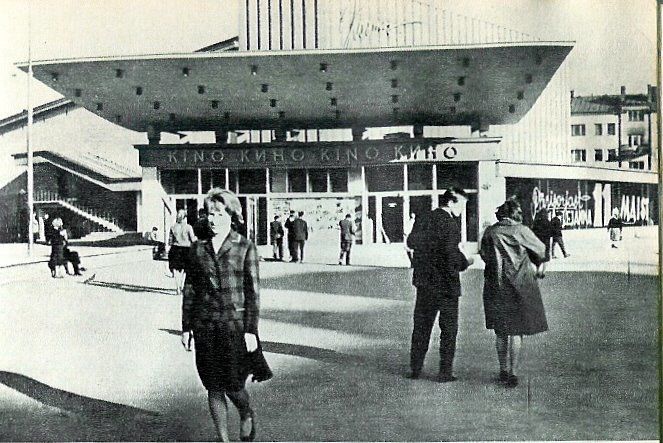
The Tallinn TV Tower, at 314 meters, is another Soviet-era prestige project — a symbol of technological superiority that now serves as a popular observation deck . And scattered throughout the city are other relics: the Kosmos Cinema, Soviet-era garages, and the Soviet Statues Exposition with its collection of old Lenin monuments .
Why Tourists Are Drawn to Soviet Brutalism
The popularity of Soviet Brutalism with tourists in Tallinn might seem counterintuitive. These are, after all, buildings associated with a repressive regime, designed in a style that was long dismissed as ugly and inhuman. Yet tourists flock to them. Why?
First, there is the raw aesthetic appeal. Brutalism has undergone a remarkable critical rehabilitation in recent decades. Once reviled as concrete monstrosity, it is now appreciated for its honesty, its sculptural qualities, and its sheer ambition . The very things that made it unpopular — its monumentality, its uncompromising use of raw materials, its rejection of ornament — are now what make it compelling. For architecture enthusiasts, Tallinn offers some of the finest examples of Soviet Brutalism anywhere in the world.
Second, there is the historical and emotional weight. These buildings are not neutral. They are physical embodiments of a difficult past, of occupation, resistance, and the strange contradictions of life behind the Iron Curtain . Tours of Soviet Tallinn, which have proliferated in recent years, take visitors through the KGB headquarters, the Hotel Viru’s surveillance floor, and Linnahall, weaving together architecture, espionage, and personal stories of survival and defiance . The guides are often native Estonians with personal family ties to these events, and their narratives connect hard historical facts with lived experience . For tourists, this is not just sightseeing; it is an encounter with history that feels immediate and human.
Third, there is the allure of decay and the “urban exploration” aesthetic. Linnahall in particular has become a pilgrimage site for fans of abandoned places . The building’s crumbling masonry, graffiti-covered walls, and eerie, cavernous interiors have a haunting beauty that draws photographers, filmmakers, and adventurous travelers . The fact that it appeared in Tenet has only added to its cult status . There is something compelling about a structure built to project permanence now slowly falling apart, reclaimed by skaters, sunset-watchers, and local teenagers filming TikToks .
Fourth, there is the complex phenomenon of “Soviet nostalgia.” This is not necessarily nostalgia for the Soviet system itself, but for a particular aesthetic, a particular mood, a particular moment in time. Linnahall’s abandoned aesthetic contributes to this nostalgia, creating a space of “dissonant heritage” that different generations and communities interpret in very different ways . For some, it represents a broken promise; for others, a lost world; for others still, simply a fascinating ruin. This ambiguity is precisely what makes it interesting.
Finally, there is the contrast. Tallinn’s medieval Old Town is one of the best-preserved in Europe, a place that seems to exist outside of time. The city’s Soviet-era architecture provides a stark counterpoint — a reminder that this fairy-tale city has a much more complicated, painful, and recent history. Walking from the cobblestones of the Old Town to the raw concrete of Linnahall or the concrete expanse of Lasnamäe is to traverse not just space but time, and to confront the many layers that make up modern Estonia .
The Future of the Concrete Past
The future of Tallinn’s Soviet Brutalist architecture is uncertain. Linnahall remains in limbo, its fate debated by politicians, architects, and citizens. Lasnamäe continues to evolve, with new apartment blocks and commercial buildings gradually changing its character . The National Library and other major buildings from the period are now recognized as significant architectural heritage .
What seems clear is that these buildings will not simply disappear. They are too large, too embedded in the urban fabric, too meaningful — even in their difficulty — to be erased. And as long as tourists continue to come, drawn by the strange beauty of concrete and the weight of history, they will remain part of Tallinn’s story.
For the traveler willing to look beyond the postcard, Tallinn’s Soviet Brutalism offers something rare: a chance to touch the twentieth century, to stand in the shadow of empire, and to see how a nation reckons with its past. The concrete may be crumbling, but the questions it raises are as solid as ever.
Book your Soviet history and brutalism tour in Tallinn with GetLocals.

Bryn Jacobs Chief Editor
Hello dear Travelers! I am Bryn Jacobs and I am your travel advisor. Having a vast experience in traveling throughout Eastern Europe and having researched this part of the world myself. I write articles on the site about travel experiences in Eastern Europe with statistics and interesting facts.